
The City Behind the Property Market
Why Does Dubai Continue to Attract International Capital?
A property market is not independent of the economy around it. Dubai's case rests on the interaction between business creation, international talent, trade, tourism, infrastructure and real-estate demand.
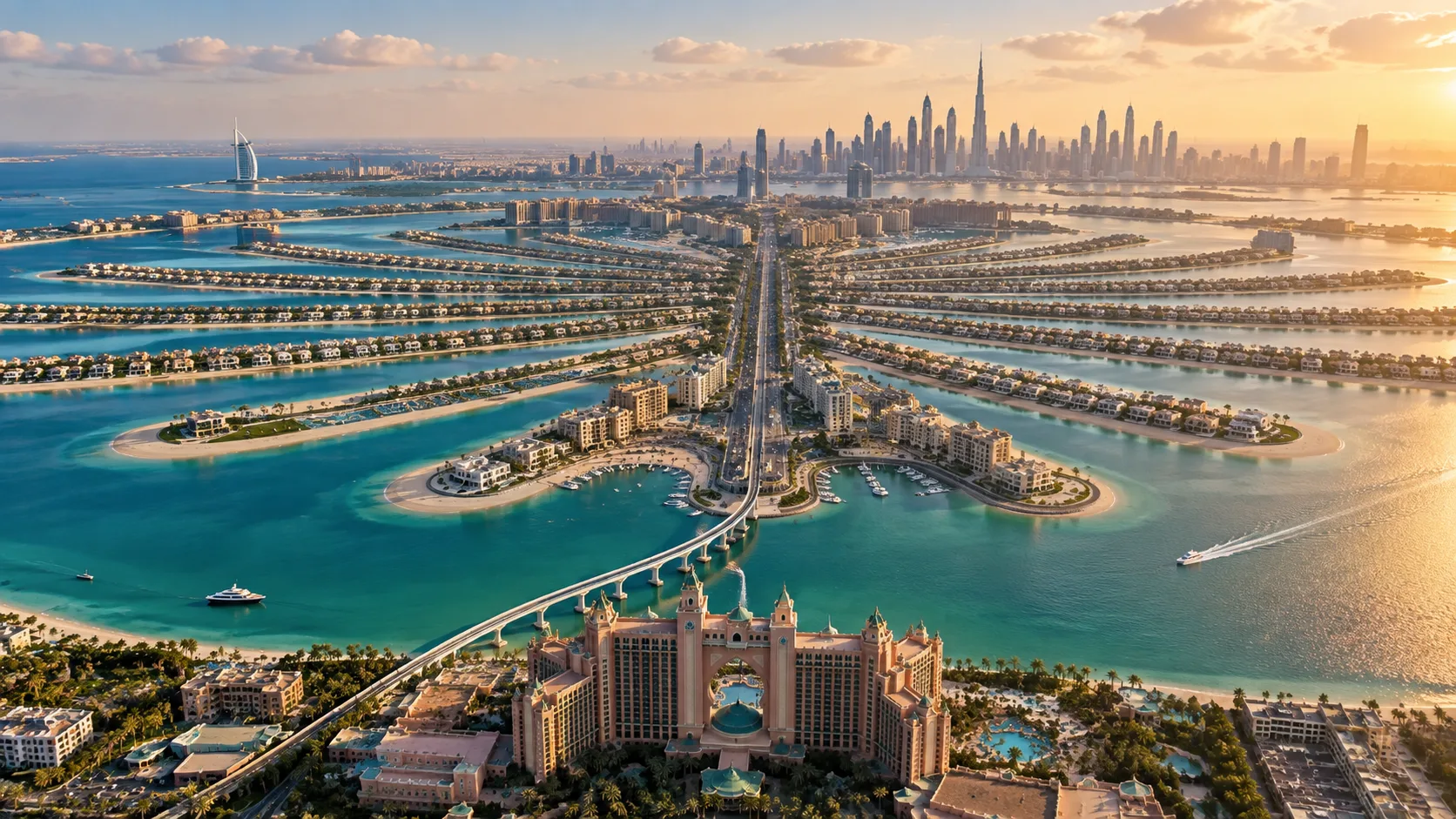
Economic Context
Property Demand Starts With the City Around It
Dubai operates as a regional base for trade, finance, professional services, technology, tourism, aviation and logistics. That mix matters because property demand can come from residents, businesses, tourists, entrepreneurs and investors rather than from one sector alone.
Dubai Economic Agenda D33
Overall D33 economic target by 2033
Long-term economic agenda covering trade, investment, digital economy, business development and global connectivity.
Connectivity
Practical as Well as Economic
For Sri Lankan investors, connectivity is practical as well as economic. Direct and connecting travel between Sri Lanka and the UAE supports business, family visits, inspections, handover and property oversight — but remote ownership still needs a management plan.
Property Ownership & Demand
Ownership Is Available — Performance Is Not Guaranteed
Foreign Ownership
Foreign nationals can purchase eligible property in designated freehold areas. Verify title, project status, developer, registration and mortgage position asset by asset.
Residential Demand
Population, employment and business formation can support rental demand — but citywide growth never guarantees a particular unit will perform.
Commercial & Industrial Demand
Offices, retail, logistics and industrial property connect to business activity, so they need tenant, fit-out, zoning, access, power and lease analysis — not residential metrics.
Investor Protection
Regulation Protects the Process — Not the Return
DLD Registration
The Dubai Land Department is central to property registration and recorded title.
RERA Oversight
RERA regulates brokerage and key parts of the real-estate ecosystem.
Off-Plan Controls
Off-plan purchases require project-specific due diligence, including registration / escrow status where applicable.
Regulation helps protect the transaction process. It does not remove:
Tax Position
Understand the UAE Position — Then Check Your Sri Lankan Position
UAE property position
- For a natural person investing in UAE real estate in a personal capacity, qualifying real-estate investment income is generally outside UAE Corporate Tax where the activity is not conducted through a licence.
- Transaction and registration costs still apply.
Sri Lankan resident position
- This does not mean the investor has no tax or reporting obligations in Sri Lanka or another country of residence.
- Sri Lankan tax residents are generally taxed on Sri Lanka and foreign-source income — obtain qualified Sri Lankan advice.
General education only — not tax advice.
Residency
Property Can Be Relevant to Residency — Eligibility Must Be Checked
UAE residence and Golden Visa pathways are separate legal / immigration programmes. Current official guidance lists a real-estate-investor Golden Visa route at a minimum qualifying property value of AED 2 million, subject to conditions. Do not choose a property solely for a visa without checking the current eligibility rules at application time.
Golden Residency
Current property-investor qualifying value reference
Conditions apply. Eligibility may depend on current ownership, developer, finance, registration, insurance and documentation. A qualifying investment may support an application — it is not automatic.
Risk
What a Strong Market Does Not Remove
Dubai's regulatory and economic environment can support investment, but it does not remove investment risk — or the Sri Lanka-side funding and reporting questions.
Property-cycle risk
Markets move in cycles; entry timing and price still matter.
Oversupply risk
Competing and pipeline stock can affect rent and resale.
Developer / project risk
Delivery, specification and handover vary by developer.
Vacancy
Letting and demand affect when income actually begins.
Service charges
Recurring ownership costs reduce net return.
Financing cost
Leverage and payment plans add timing and cost risk.
FX exposure
LKR / AED movement changes the home-currency outcome.
Liquidity / exit risk
Some assets are slower to sell at a fair price.
Home-country obligations
Sri Lankan regulatory and tax obligations still apply.
Why Dubai — Frequently Asked Questions
Why do international investors consider Dubai?
A combination of business activity, connectivity, a structured property framework, an AED currency linked to the US dollar, a distinct UAE tax environment and long-term city planning. The important question is where growth creates sustainable demand.
Can foreigners buy property in Dubai?
Foreign nationals can own eligible property in designated freehold areas, subject to current law, area designation and DLD registration.
Is Dubai property "tax free" for a Sri Lankan investor?
A UAE-level position does not remove Sri Lankan tax or reporting obligations. Sri Lankan tax residents are generally taxed on foreign-source income — verify your own position.
Does buying property automatically give me a Golden Visa?
No. Property-linked residency has current ICP eligibility, value and documentation conditions (a reference of AED 2 million property value) that must be verified. It is not automatic.
What should I verify before buying?
Evidence of value, the developer and project, service charges, financing terms, the freehold-area designation, registration and documentation — and, on the Sri Lanka side, your lawful funding route and tax position.
Have a Dubai Investment Question?
Ask about real estate, business setup, legal documentation, ownership, costs, residency or the Sri Lanka-side funding route. A consultant can review your objective and explain the next steps.
Dubai Market Intelligence — In Your Inbox
Dubai Market Intelligence in Your Inbox
Receive selected Dubai property, business, legal/regulatory reports, market updates and Sri Lanka-relevant investor guides.